Thoughts for the Day
Wednesday, 23rd September 2026: Acts - Day 40
Paul Church Love Feast Acts 20 Agape Worship Eucharist
Reading : Verses from Acts, Chapter 20
Paul Goes to Macedonia and Greece
After the uproar had ceased, Paul sent for the disciples; and after encouraging them and saying farewell, he left for Macedonia. When he had gone through those regions and had given the believers much encouragement, he came to Greece, where he stayed for three months. He was about to set sail for Syria when a plot was made against him by the Jews, and so he decided to return through Macedonia. He was accompanied by Sopater son of Pyrrhus from Beroea, by Aristarchus and Secundus from Thessalonica, by Gaius from Derbe, and by Timothy, as well as by Tychicus and Trophimus from Asia. They went ahead and were waiting for us in Troas; but we sailed from Philippi after the days of Unleavened Bread, and in five days we joined them in Troas, where we stayed for seven days.
Paul’s Farewell Visit to Troas
On the first day of the week, when we met to break bread, Paul was holding a discussion with them; since he intended to leave the next day, he continued speaking until midnight. There were many lamps in the room upstairs where we were meeting. A young man named Eutychus, who was sitting in the window, began to sink off into a deep sleep while Paul talked still longer. Overcome by sleep, he fell to the ground three floors below and was picked up dead. But Paul went down, and bending over him took him in his arms, and said, ‘Do not be alarmed, for his life is in him.’ Then Paul went upstairs, and after he had broken bread and eaten, he continued to converse with them until dawn; then he left. Meanwhile they had taken the boy away alive and were not a little comforted.
(Lectionary, New Revised Standard Version)
Thoughts
Paul is visiting a number of churches he has already established, teaching and encouraging them, before heading back to Jerusalem. He has gathered a number of people who will continue the work of the Apostles, for this is to be a shared ministry if they are to fulfill Jesus' command to go to all nations (Matthew 28.18-20).
We get an insight into the life of the new Church in today's reading from Acts Chapter 20. This is the first time we get a mention of 'the first day of the week', which is not the Jewish Saturday, but the Sunday, the day that Christians remember the resurrection of our Lord. Theologians believe we have an account of an act of worship held in the evening after work, since Sunday was a working day for most people. So Paul didn't preach from morning to night, and Eutychus was probably tired after a day's work and fell asleep! The time of worship was held on 'the first day of the week' when they 'met to break bread' (as in the Eucharist today) 'as was their custom' which included a time of 'discussion', ie teaching or a sermon.
But the second time bread is mentioned, when they had 'broken bread and eaten' is a shared meal (often called a 'Love Feast' or Agape) where the wealthier Christians shared food with the poorer Christians. We should remember that there were many slaves and servants in the Church, for whole household's were being baptised at this time.
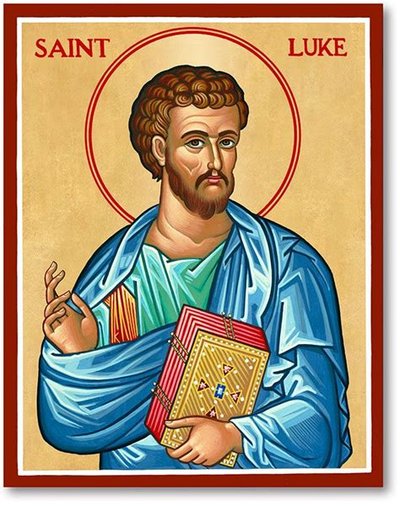
Lastly we should also note the language changes from the third person (ie 'he was about to set sail') to the first person ('we sailed'). The writer of Luke's Gospel and the Acts of the Apostles is back in the picture!
Prayer
Lord God,
in our busy and frenetic world
may we not forget the importance of the Sabbath
as a day for worship and rest.
Where this is not possible
may we find other times for worship,
and for building up the Church community.
Keep us ever mindful of time to read our bible
and to study its teaching,
that our faith will continue to deepen.
Amen.
You might like to read this:
- The early Church worship (Free Bible Studies)
Or play this:
- Let us break bread together (Chet Valley Hymns and Songs)